WTC / EFL Speaking
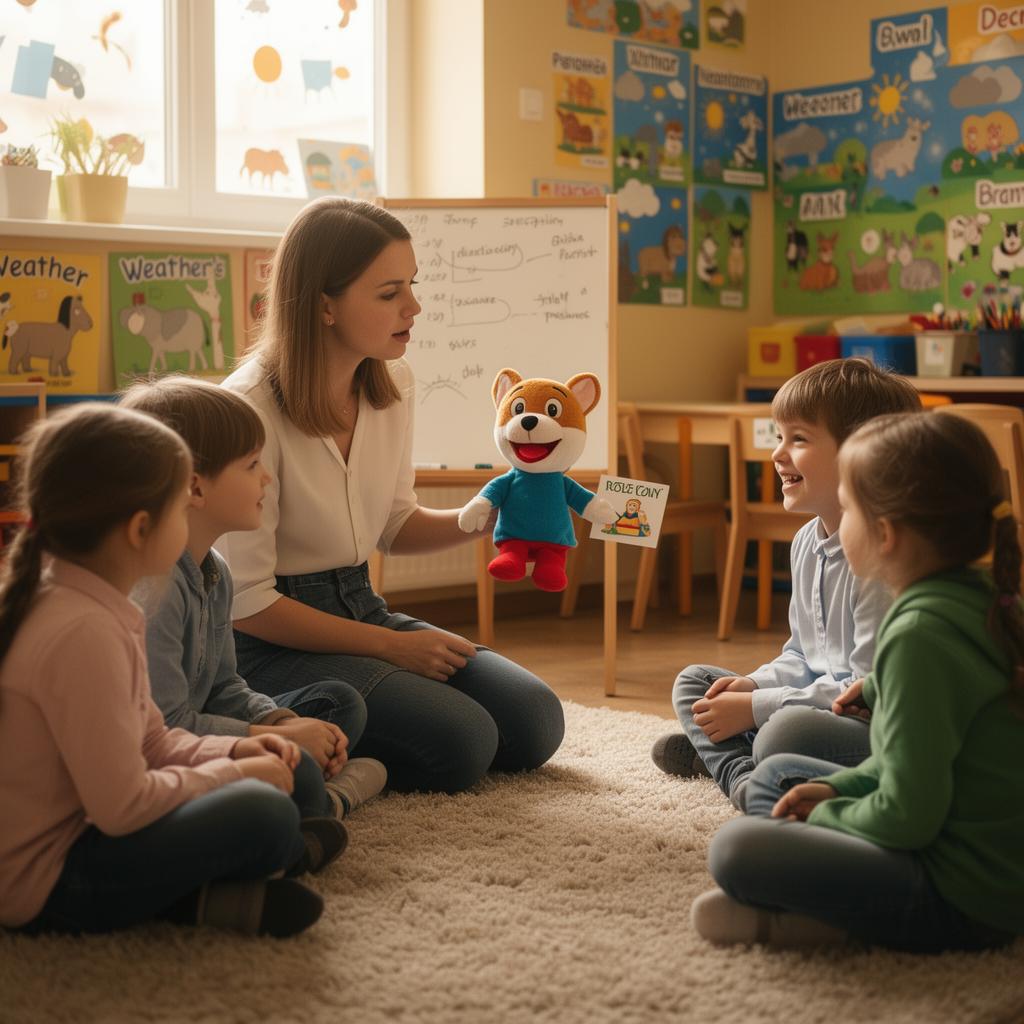
Young EFL learners speaking in a Polish primary-school classroom

MA Thesis · Defended 2026

Enhancing Willingness to Communicate through Speaking Activities in the EFL Classroom

A small-scale classroom action-research study with four Grade-2 learners in a Polish primary school — tracing how young EFL learners' readiness to speak grew, hesitated, and reshaped itself across eight weeks.

Author

Ngoc Yen Nguyen

Supervisor

Sylvia Maciaszczyk, PhD

Reading time

~ 45 min

4

Grade-2 learners

8

Weeks of intervention

3

Action-research cycles

5

Speaking task types

Abstract

What this study is about

This thesis examines how learners' WTC-related participation changed during a repeated set of speaking activities in a small EFL classroom. The study was carried out with four Grade-2 learners aged 7–8 in a Polish primary school using Learning Lands 2. The intervention lasted eight weeks and was organised into three action-research cycles, drawing on Information-gap, Supported Role-play, Planning Time, Structured Turn-taking, and Free-topic Speaking activities.

The analysis focused on four observable indicators: speaking first, asking questions, producing longer answers, and talking to peers. Findings show clearer growth in speaking first, asking questions, and peer interaction — but the change was not always stable. WTC in young EFL learners appeared to be shaped by task type, classroom interaction, interruption, and teacher support.

Keywords · willingness to communicate · young learners · EFL classroom · speaking activities · classroom interaction · speaking anxiety

Inside the classroom

What an eight-week study looks like

The intervention unfolded across three action-research cycles. Each cycle introduced a new activity type, kept what worked from the previous one, and adjusted to what the four learners actually did when invited to speak.

Information-gap pairsCycle 1 · Weeks 1–3

Opening the floor

Information-gap pairs

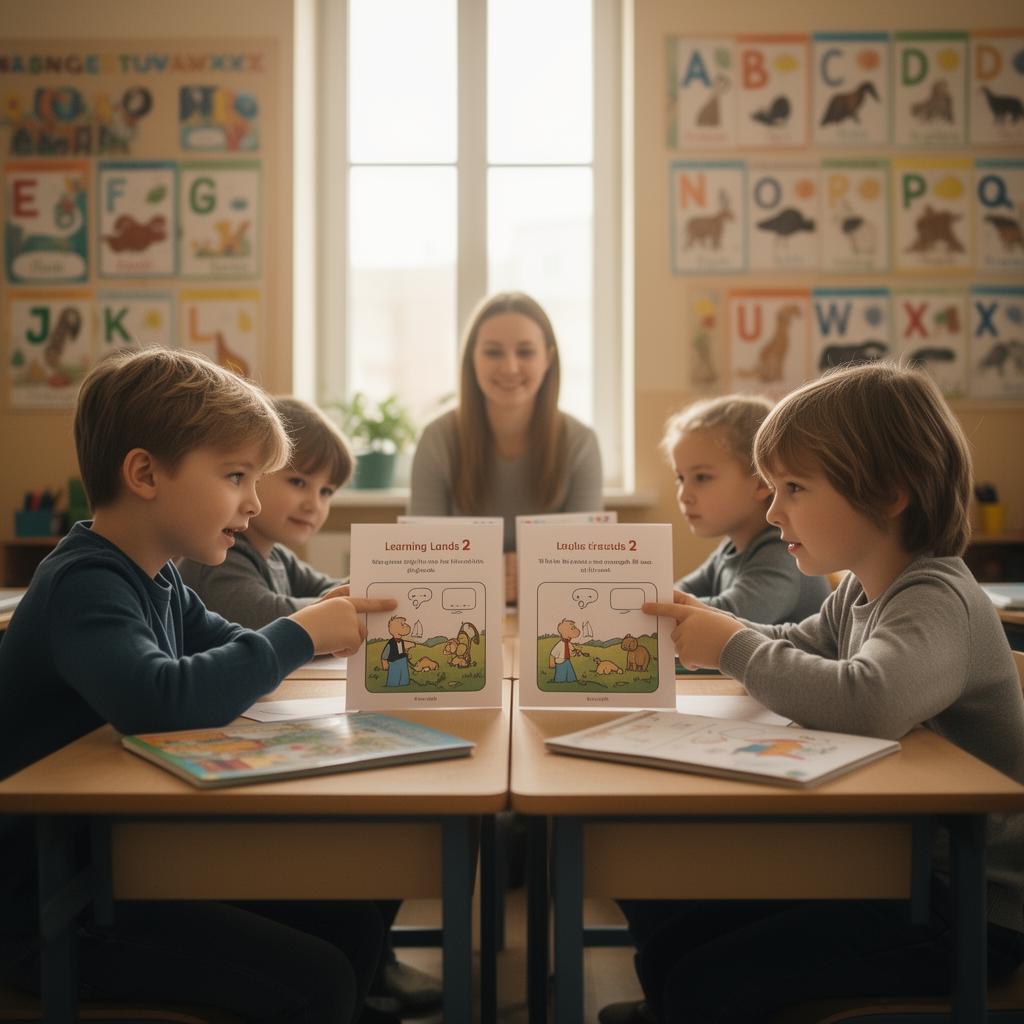
Each child held half of a picture set and had to ask, listen and confirm in English to complete a shared outcome. The information gap forced talk and produced the first signs of speaking first and asking questions — but answers stayed short and learners often waited to be nominated.

Supported role-play + planning timeCycle 2 · Weeks 4–6

Lowering the social cost

Supported role-play + planning time

A puppet and short role cards let learners speak through a character. Planning time before each turn and explicit teacher scaffolding reduced anxiety, lengthened answers, and made peer-to-peer talk more frequent — though one learner regressed when interrupted.

Structured turn-taking + free-topic speakingCycle 3 · Weeks 7–8

Speaking on their own terms

Structured turn-taking + free-topic speaking

A talking-token routine guaranteed every learner a turn, then opened into free-topic mini-talks on familiar content (pets, weekend, favourite food). Speaking first and peer interaction became more stable; longer answers remained the hardest indicator to grow.

Across the three cycles, four WTC indicators were tracked weekly: speaking first, asking questions, producing longer answers, and talking to peers. Three of the four grew; longer answers remained fragile and task-dependent.

Table of Contents

Read the full thesis

Each chapter reads as a long-form essay, with concise theory boxes, classroom examples, and an audio narration plus on-demand Vietnamese translation for every section.

  1. 0

    Introduction

    Why learners stay silent even when they have enough English to speak.

  2. I

    Speaking in EFL Classrooms

    Defining speaking, its role in acquisition, and the challenges EFL learners face.

    • · 1.1 Definition & Importance of Speaking
    • · 1.2 Types of Speaking Activities
    • · 1.3 Theoretical Background (CEFR, TBLT)
    • · 1.4 Speaking as Real-Time Language Use
    • · 1.5 Communicative Competence & Intelligibility
    • · 1.6 From Drills to Tasks
    • · 1.7 Classroom Interaction & Participation
  3. II

    Willingness to Communicate in the L2 Classroom

    From a stable personality trait to MacIntyre's pyramid model of L2 WTC.

    • · 2.1 From Trait Willingness to the L2 WTC Construct
    • · 2.2 The L2 WTC Pyramid Model
    • · 2.3 Tasks, Emotions & Self-Beliefs
    • · 2.4 SPCC & Anxiety
  4. III

    Emotions, Motivation & Classroom Interaction

    Emotion, motivation, teacher–student rapport and the pressure of saving face in front of peers.

    • · 3.1 Emotions in the Foreign Language Classroom
    • · 3.2 Motivation, Goals and the Learner's Self
    • · 3.3 Teacher–Student Rapport & Emotional Safety
    • · 3.4 Peer Relations, Face and Participation
  5. IV

    Empirical Research

    Four Grade-2 learners in Poland, an eight-week intervention, three action-research cycles. What actually changed?

    • · 4.1 Aim, Design & Instruments
    • · 4.2 Discussion of Findings
    • · 4.3 Limitations
  6. !

    Limitations of the Study

    Sample size, teacher-as-researcher role, time scope, the absence of a control group, adapted instruments — and directions for further research.

  7. §

    Recommendations for Teachers

    Five classroom-tested suggestions: activity continuum, planning time, turn-taking, playful familiar content, weekly WTC tracking.

  8. ?

    Defense Q&A Bank

    A bank of questions the committee may ask, each with why it matters and a short suggested answer — in English, with one-click Vietnamese translation.

  9. Defense Slides

    Presentation deck — arrow-key navigation, fullscreen mode, bilingual.

  10. Conference Poster

    The whole thesis on a single printable conference poster — with figures and tables.